
Determining biological paternity can be an important step when family relationships, legal rights, financial responsibilities, or official documents are involved. For situations where DNA evidence may be submitted to a court, government office, immigration authority, or another official organization, selecting an Accredited Legal Paternity DNA Testing Philippines service is especially important. A legal paternity test is not simply about collecting DNA and receiving a laboratory result. The process also involves identifying the people being tested, collecting samples under controlled conditions, documenting the handling of those samples, and maintaining appropriate records. These safeguards help establish that the DNA analyzed by the laboratory belongs to the individuals named in the testing documentation. Philippine rules concerning DNA evidence address matters such as chain of custody, laboratory qualifications, testing methodology, and reliability. Understanding how legal paternity testing works can help individuals make informed decisions before arranging a test.
Understanding Legal Paternity DNA Testing in the Philippines
An Accredited Legal Paternity DNA Testing Philippines service is intended for circumstances where DNA results may need to be used for an official or legal purpose. The scientific process compares DNA profiles from the child and the alleged biological father to determine whether the genetic findings support a biological father-child relationship. DNA analysis can provide powerful evidence because genetic information is inherited from biological parents. However, the scientific accuracy of the analysis is only one part of a legally appropriate testing process. The identities of the participants and the handling of their biological samples must also be properly documented. Philippine courts have recognized DNA testing as a method for addressing questions of biological relationships, including paternity and filiation. For this reason, anyone who needs DNA results for a formal proceeding should specifically ask for a legal testing process rather than assuming that any commercially available paternity test will meet the necessary requirements.
Why Legal Paternity Testing Is Different From a Personal DNA Test
People often assume that all paternity DNA tests are interchangeable because they rely on DNA analysis. While the underlying science may be similar, the procedures surrounding sample collection and documentation can be substantially different. A personal or peace-of-mind test is generally obtained to answer a private question and may provide flexibility in how samples are collected. A legal paternity test generally requires stronger controls because another party may later need to verify the identity of the people who provided the samples. Identification checks, witnessed collection, sample labeling, secure packaging, and chain-of-custody records can all form part of the legal testing process. These procedures are designed to reduce questions about sample substitution, contamination, or mistaken identity. Philippine DNA evidence rules provide specific considerations for determining the reliability and admissibility of DNA evidence, including the manner in which samples were collected and handled. Therefore, someone who expects to use a paternity report in a legal matter should select the appropriate type of test from the beginning.
Situations That May Require Legal Paternity DNA Testing
There are several circumstances in which establishing biological paternity may become legally relevant in the Philippines. A paternity dispute may arise when an alleged father questions whether he is biologically related to a child. DNA evidence may also become relevant when a parent is seeking to establish biological parentage in connection with a family-law proceeding. Questions of biological relationships can sometimes arise in matters involving inheritance, estates, or claims involving family relationships. Paternity information may also have relevance in child-support proceedings when biological parentage is disputed or needs to be established. In certain situations, DNA testing may be requested for immigration or other official purposes, although the specific requirements depend on the organization requesting the evidence. Philippine Supreme Court decisions have recognized DNA testing as a scientifically accepted way to help resolve questions involving filiation and paternity. Because the legal requirements can differ depending on the purpose, participants should determine where the results will be submitted before arranging the test.
How an Accredited Legal Paternity DNA Test Works
The process generally starts with identifying the purpose of the DNA examination and determining which individuals need to participate. The testing provider can explain what identification documents, consent forms, and other paperwork are required. Participants are typically asked to verify their identities before biological samples are collected. A trained collector then obtains DNA samples according to the provider’s legal testing procedures, commonly using a cheek swab. The collected samples are labeled and secured so they can be associated with the correct participants throughout the testing process. Records may document the collection, transfer, transportation, receipt, and laboratory processing of the samples. Philippine Supreme Court guidance regarding DNA evidence emphasizes safeguards involving collection, identification, preservation, and protection against tampering. Once the laboratory completes its analysis, the findings are compiled into an official report that can be provided according to the applicable release procedures.
The Importance of Identity Verification
Identity verification is one of the most important differences between formal legal testing and informal sample collection. Before a sample is collected, participants may be required to provide acceptable identification documents. This allows the testing provider to establish a connection between the individual and the biological specimen collected from that person. For a legal proceeding, this connection can be important because the court or another authority needs confidence that the DNA profile belongs to the person identified in the report. Without appropriate identity documentation, questions may arise regarding who actually provided the sample. A professional legal testing process therefore places significant attention on accurately recording participant information. The identity verification process may vary depending on the provider, the participants, and the purpose of the examination. Anyone booking an Accredited Legal Paternity DNA Testing Philippines service should ask in advance what identification documents are required.
Chain of Custody and DNA Sample Protection
Chain of custody refers to the documented history of an evidence item from the time it is collected until it reaches the laboratory and, when applicable, is presented for legal purposes. In a legal paternity test, this can involve recording who collected the sample, how it was sealed, who transported it, and when the laboratory received it. These records are intended to demonstrate that the sample remained properly controlled throughout the testing process. Proper labeling also helps prevent samples from being confused with those belonging to another participant. Secure packaging can provide additional protection against tampering or accidental interference. Philippine Supreme Court materials discuss chain-of-custody considerations and the importance of documenting the collection, handling, protection, and transfer of DNA evidence. When DNA evidence is intended for legal use, choosing a provider with a clearly documented chain-of-custody procedure can therefore be an important consideration.
Laboratory Accreditation and Professional Qualifications
The laboratory performing the DNA analysis is another important consideration when selecting a legal testing provider. Accreditation and recognized quality credentials can help demonstrate that a laboratory follows established procedures for its testing operations. The qualifications and experience of the personnel responsible for DNA analysis may also be relevant to the credibility of the results. Philippine DNA evidence rules identify laboratory qualifications and accreditation among the factors that may be considered when evaluating DNA evidence. Individuals should therefore ask which laboratory will actually analyze the samples rather than relying only on the name of a service provider or collection center. It is also reasonable to ask what current accreditation or quality certifications the laboratory maintains. Credentials should be verified directly when possible because accreditation status and certifications can change over time. A transparent provider should be able to explain its laboratory credentials and the standards used during DNA analysis.
Understanding the Science Behind Paternity DNA Testing
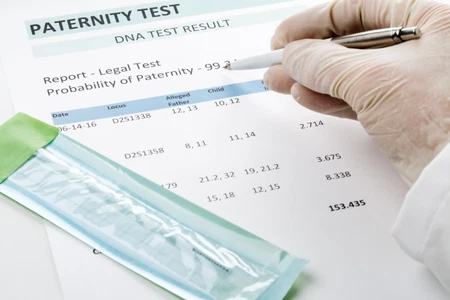
DNA is the genetic material that carries inherited information throughout the body. A child receives genetic material from both biological parents, allowing laboratories to compare specific genetic markers between individuals. During a paternity examination, the child’s DNA profile is compared with the alleged father’s profile to determine whether the observed genetic information is consistent with biological fatherhood. The laboratory then uses statistical calculations to assess the strength of the evidence. A report may state that the alleged father is excluded or may provide a probability of paternity when the results support the relationship. The Philippine Rule on DNA Evidence recognizes DNA analysis as a scientific method for determining genetic relationships and provides standards concerning the interpretation of DNA evidence. Understanding this basic science can help clients read their reports more confidently while recognizing that legal interpretation may depend on the circumstances of the specific matter.
How to Read a Paternity DNA Test Report
A legal paternity DNA report can contain several technical terms that may be unfamiliar to someone who has never undergone DNA testing. One of the most important distinctions is between an exclusion and a result that supports paternity. An exclusion indicates that the genetic evidence does not support the tested man as the biological father. When the genetic findings support paternity, the report may provide a probability of paternity based on statistical analysis. Under the Philippine Rule on DNA Evidence, a probability of paternity of 99.9% or higher creates a disputable presumption of paternity, while a probability below 99.9% is treated as corroborative evidence under the rule. A disputable presumption can still be challenged according to applicable legal procedures, so it should not be treated as an absolute legal determination in every circumstance. If the report is being used in a court matter, a qualified legal professional can help explain how the findings may relate to the particular proceeding.
Documents Required for Legal Paternity DNA Testing
Proper documentation is an essential part of formal DNA testing. Adult participants may be asked to present valid government-issued identification during the collection appointment. A child may require a birth certificate or another acceptable document establishing the child’s identity. Consent forms may also need to be completed before samples are collected. Depending on the circumstances, a court order, letter request, or other official documentation may be required. The Philippine National Police, for example, lists identification documents, relevant documents concerning a minor, a letter request or court order, payment documentation, and a consent form among requirements for non-criminal DNA examination. Requirements can differ between providers and depending on whether the testing is intended for a court, government agency, immigration matter, or another official purpose. Contacting the provider before the appointment can help ensure that all required documents are prepared correctly.
Cost of Accredited Legal Paternity DNA Testing in the Philippines
The cost of legal paternity DNA testing varies depending on the laboratory, service provider, number of participants, and collection arrangements. A basic test involving a child and alleged father may have different pricing from a test involving additional family members. Some providers may charge additional fees for mobile sample collection, expedited processing, or other specialized services. Clients should ask whether the quoted amount includes sample collection, laboratory analysis, documentation, and delivery or release of the report. It is also important to ask whether there are additional charges that could arise after the appointment. Choosing the lowest-priced option may not be appropriate if the test is needed for a formal proceeding and the provider does not offer the required legal collection procedures. Comparing credentials, procedures, documentation, turnaround time, and total cost provides a more useful basis for choosing a provider. Before making payment, clients should request a clear explanation of what the quoted price covers.
How Long Does Legal Paternity Testing Take?
The turnaround time for an Accredited Legal Paternity DNA Testing Philippines service depends on the testing provider and the type of service selected. The process includes more than laboratory analysis because participants must first complete scheduling, identification, consent, and sample collection. After collection, the samples may need to be transported to the appropriate laboratory. Laboratory staff then conduct the DNA analysis and complete the necessary quality-control procedures. The report must subsequently be reviewed and prepared for release. Some providers may offer faster processing for an additional fee, while standard testing may require more time. If the DNA results are needed before a specific court date, government appointment, or submission deadline, clients should discuss the deadline with the provider before testing. Planning ahead can reduce unnecessary stress and provide enough time to address unexpected administrative or logistical delays.
How to Select the Right Legal DNA Testing Provider
Selecting a legal DNA testing provider should begin with a clear understanding of why the test is needed. Ask whether the provider specifically offers legal paternity testing rather than only private or peace-of-mind testing. Find out which laboratory performs the actual DNA analysis and ask about relevant accreditation, certification, and professional qualifications. Ask how identities are verified and whether sample collection is supervised by authorized personnel. It is also useful to ask how samples are labeled, sealed, transported, and tracked. The provider should be able to explain the expected turnaround time, required documentation, pricing, confidentiality procedures, and report-release process. These questions can help you determine whether the service is appropriate for the legal purpose for which the DNA evidence is required.
Common Mistakes to Avoid When Ordering a Legal Paternity Test
A major mistake is assuming that any DNA paternity test can automatically be used in court. Another common problem is choosing an inexpensive test without checking whether the provider follows legal sample-collection and chain-of-custody procedures. Some people may also collect samples privately without realizing that formal identification and supervised collection could be required for their intended purpose. Providing incomplete or incorrect identification documents can cause delays and may complicate the testing process. Waiting until shortly before a court or government deadline can create additional pressure if appointments or laboratory processing take longer than expected. Clients should also avoid opening, transferring, or otherwise interfering with samples after they have been formally collected and secured. Proper handling is important because DNA evidence must be traceable from collection through analysis. Taking time to understand the process before the appointment can help prevent avoidable problems.
Privacy and Confidentiality in Paternity DNA Testing
Paternity testing involves highly personal genetic information, making privacy an important consideration when selecting a testing provider. Before testing, participants should ask how their DNA samples, profiles, records, and reports will be stored and protected. They should also understand who can access the results and under what circumstances information may be released. A responsible provider should have clear procedures for handling confidential records and limiting access to authorized individuals. Philippine DNA evidence rules include provisions addressing the confidentiality and preservation of DNA profiles and test results. Individuals should be especially careful when sharing DNA reports electronically or providing copies to people who are not involved in the relevant legal matter. Asking privacy questions before submitting a biological sample can provide greater confidence about how sensitive information will be managed. Clients should also keep official reports and related documents in a secure location after receiving the results.
What Happens After You Receive the DNA Results?
Receiving the DNA report is an important point in the testing process, but what happens afterward depends on why the test was requested. If the test was ordered or requested for a court proceeding, the report may need to be submitted according to specific legal procedures. If an immigration or government authority requested the test, the report may need to follow that agency’s submission instructions. Individuals should keep the original report and supporting documentation secure. It may also be useful to retain information regarding the collection appointment and chain of custody when those records are provided. A DNA result can provide significant evidence concerning biological parentage, but it does not necessarily resolve every separate legal question associated with a family matter. Courts may evaluate DNA evidence together with other evidence and the applicable legal rules. For important matters involving parental rights, support, inheritance, or other legal consequences, obtaining advice from an appropriately qualified Philippine lawyer can help clarify the next steps.
Frequently Asked Questions About Accredited Legal Paternity DNA Testing Philippines
1. What is an Accredited Legal Paternity DNA Testing Philippines service?
An Accredited Legal Paternity DNA Testing Philippines service provides paternity testing through procedures designed for official or legal use. The process generally includes participant identification, supervised sample collection, documentation, secure handling, laboratory analysis, and an official report. The exact requirements can differ depending on the provider and the purpose of the test. If the results are intended for court, government, immigration, or another formal proceeding, this purpose should be stated before samples are collected. That allows the provider to determine which collection and documentation procedures should be followed. Legal DNA testing is therefore more than simply obtaining a genetic result. The complete process is important when the report may later be evaluated by an official authority.
2. Is a home paternity DNA test the same as a legal DNA test?
A home paternity test and a legal paternity test may use similar DNA analysis, but the collection procedures can be different. Home testing may be intended primarily for personal information. Legal testing generally involves additional safeguards designed to establish participant identity and maintain a documented chain of custody. These safeguards can be important when the DNA results are intended for court or another official proceeding. Philippine courts consider factors relating to DNA sample collection, handling, laboratory qualifications, methodology, and reliability. Therefore, someone who expects to use the results legally should arrange a legal test rather than assuming a privately collected sample will satisfy every requirement. The specific evidentiary requirements should be confirmed for the particular legal matter.
3. How accurate is paternity DNA testing?
DNA testing can provide highly reliable scientific evidence regarding biological parentage when properly conducted. The laboratory compares relevant genetic markers and applies statistical methods to evaluate the relationship. The quality of the result depends not only on the analytical process but also on correct participant identification and proper sample handling. Philippine DNA evidence rules address the reliability of testing methodology and other factors relevant to evaluating DNA evidence. A professional laboratory should use appropriate quality-control procedures throughout the analysis. Clients should review the actual laboratory report rather than relying only on informal descriptions of the result. When the result will be used in a legal matter, the scientific findings and the legal documentation should both be considered.
4. What documents should participants bring?
The required documents depend on the provider and the reason for the test. Adults will commonly need acceptable identification documents. A minor may require documentation establishing the child’s identity and information about the responsible parent or guardian. Consent forms may also be required before DNA samples can be collected. Certain official testing services may require a court order or letter request. The Philippine National Police publishes requirements for its non-criminal DNA examination service that include identification documents, relevant documents concerning minors, a letter request or court order, payment documentation, and consent. (fg.pnp.gov.ph) The safest approach is to request the provider’s current document checklist before the scheduled appointment.
5. Can a legal paternity DNA test be used for child support?
DNA evidence may be relevant to a child-support matter when biological paternity is disputed or needs to be established. However, a DNA result does not independently determine every issue relating to child support. The applicable court or authority will consider the evidence under Philippine law and the circumstances of the proceeding. A legally collected DNA sample can provide evidence regarding the biological relationship between a child and the tested man. This is one reason why formal sample collection can be important when a legal dispute is anticipated. Individuals should ask their lawyer or the relevant authority whether a particular type of DNA report is required. Following the appropriate legal testing procedure from the beginning can help avoid complications later.
6. Can DNA testing be used in inheritance disputes?
DNA testing can be relevant when biological relationships become an issue in inheritance or estate proceedings. Establishing biological parentage may help address questions involving filiation when those questions are legally relevant. Philippine Supreme Court decisions have recognized DNA testing as a method that can assist in resolving questions involving biological relationships. (elibrary.judiciary.gov.ph) The appropriate testing approach depends on the circumstances and the individuals available for testing. If a potential biological parent is deceased, other possible testing arrangements may sometimes be considered depending on the available biological material and legal circumstances. Because inheritance disputes can involve complex legal rights, DNA testing should be coordinated with appropriate legal advice. A laboratory can explain the scientific testing options, while a qualified legal professional can explain the relevant legal procedures.
7. How long does legal paternity testing take?
The testing timeframe varies between providers and depends on the selected service. The process can involve appointment scheduling, identity verification, sample collection, transportation, laboratory analysis, quality control, and report preparation. Standard processing and expedited processing may have different turnaround times. Clients should ask the provider whether its stated timeframe begins on the collection date or when the laboratory receives the samples. If a court or government deadline exists, that date should be disclosed before the appointment. This allows the provider to explain whether the requested timeframe is compatible with its available services. Planning the test early is generally preferable when the results are needed for an important legal or administrative deadline.
Takeaway: Making an Informed Choice About Legal Paternity DNA Testing
An Accredited Legal Paternity DNA Testing Philippines service can be an important resource for individuals who need scientifically supported evidence of biological paternity for an official purpose. The strongest legal testing process involves more than DNA analysis because participant identification, supervised collection, sample security, chain of custody, laboratory qualifications, and documentation all matter. Before booking a test, clients should clearly identify why they need the results and where those results will be submitted. They should verify the credentials of the laboratory performing the analysis and ask detailed questions about the testing process. It is also important to understand the difference between a private DNA test and one specifically designed for legal use. Philippine rules provide a framework for evaluating DNA evidence, including considerations related to methodology, reliability, laboratory qualifications, and chain of custody. By choosing an appropriate testing service and preparing the required documentation in advance, individuals can approach the process with greater clarity and confidence.