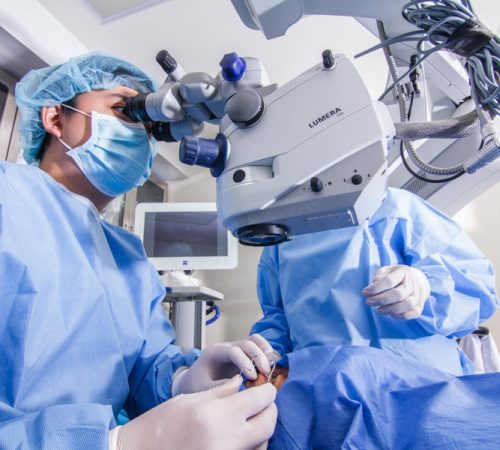
Phakic IOL offers a reliable and long-term solution for individuals struggling with nearsightedness, also known as myopia. Unlike conventional refractive surgeries that reshape the cornea, Phakic IOL involves inserting a specialized intraocular lens into the eye while preserving the natural lens. This approach allows patients to enjoy clearer vision without removing or altering the eye’s natural structure. Phakic IOL is particularly beneficial for those with high levels of myopia or thin corneas, where procedures like LASIK may not be suitable.
Peregrine Eye and Laser Institute, with locations in Makati, Manila, and Quezon City, provides Phakic IOL surgery using state-of-the-art technology and a team of highly trained ophthalmologists. Patients can expect world-class care that prioritizes both safety and visual outcomes.
What is a Phakic IOL?
Phakic IOL is a type of intraocular lens designed to correct refractive errors in patients who are nearsighted. Unlike pseudophakic IOLs used after cataract surgery, Phakic IOL leaves the natural lens intact. The lens is carefully implanted either in front of or behind the iris to improve focusing ability and reduce dependency on glasses or contact lenses.
There are two main types of Phakic IOL: anterior chamber lenses, placed in front of the iris, and posterior chamber lenses, positioned behind the iris but in front of the natural lens. Both types effectively address myopia and can provide sharper vision, especially for individuals who are not ideal candidates for corneal-based procedures like LASIK or PRK.
Phakic IOL works by bending incoming light to focus correctly on the retina, correcting the blurriness caused by nearsightedness. Patients often experience immediate improvement in vision after surgery, with many achieving 20/40 vision or better.
How Phakic IOL Surgery Works
Phakic IOL surgery begins with a thorough eye examination to determine suitability, including measurements of corneal thickness, eye length, and the degree of myopia. During the procedure, a small incision is made at the front of the eye, and the lens is carefully inserted and positioned either in front of or behind the iris.
The surgery typically takes less than 30 minutes and is performed under local anesthesia, ensuring comfort for the patient. Unlike other eye surgeries, Phakic IOL does not involve removing the natural lens, which helps preserve the eye’s natural focusing ability.
Recovery is usually quick, with most patients noticing improved vision within a day or two. Follow-up visits ensure proper lens positioning and monitor the healing process. Phakic IOL provides a predictable and consistent outcome, with minimal risk of complications when performed by experienced surgeons.
Who is a Candidate for Phakic IOL?
Phakic IOL is suitable for patients with moderate to high myopia, particularly those who are not ideal candidates for LASIK due to thin corneas or irregular corneal shapes. Candidates should generally be over 18 years old and have a stable prescription for at least one year.
Individuals with healthy eyes, normal corneal shape, and no significant eye disease are typically considered good candidates for Phakic IOL. The procedure can correct nearsightedness ranging from mild to severe, providing a safe and effective alternative for patients seeking permanent vision correction.
Phakic IOL can also benefit patients who experience discomfort or dryness with contact lenses, offering a more convenient and long-lasting solution. Proper evaluation by an experienced ophthalmologist ensures that each patient receives a personalized recommendation for their specific vision needs.
Benefits of Phakic IOL
Phakic IOL offers several advantages over other refractive surgeries. The most significant benefit is that it preserves the natural lens, reducing the risk of complications associated with lens removal. This preservation also makes Phakic IOL reversible if necessary.
Patients can enjoy improved vision almost immediately after surgery, with many achieving 20/40 vision or better without glasses. The procedure provides long-term correction for myopia, reducing dependency on corrective lenses and enhancing quality of life.
Phakic IOL is particularly beneficial for individuals with high levels of nearsightedness who are not suitable for LASIK or other corneal procedures. The lens is made from biocompatible materials such as plastic or silicone, ensuring safety and long-lasting performance.
Additionally, Phakic IOL has a low risk of visual distortions or halos, which can occur in some laser-based procedures. Patients often report higher satisfaction rates due to the natural vision correction and minimal disruption to the eye’s anatomy.
Why Choose Peregrine Eye and Laser Institute
Peregrine Eye and Laser Institute provides expert Phakic IOL surgery with a team of highly trained ophthalmologists and sub-specialists. Doctors at Peregrine have trained at world-renowned institutions, including Harvard Medical School, Johns Hopkins University, UCLA, California Pacific Medical Center, University of Wisconsin, and Singapore National Eye Center.
The institute’s facilities in Makati, Manila, and Quezon City feature advanced diagnostic tools and operating theaters equipped with the latest ophthalmic technology. Patients benefit from precision surgery, personalized care, and a holistic approach that addresses both medical and human needs.
Peregrine Eye and Laser Institute has successfully performed both simple and complex cases for local and international patients. The team is committed to providing high-quality care while ensuring comfort, safety, and a seamless surgical experience.
Takeaway
Phakic IOL provides a permanent and effective solution for nearsightedness, helping patients reduce reliance on glasses or contact lenses while preserving natural eye anatomy. Peregrine Eye and Laser Institute offers expert evaluation, advanced surgical techniques, and compassionate care for patients seeking clearer vision across Makati, Manila, and Quezon City. With a focus on safety, precision, and patient satisfaction, Phakic IOL surgery at Peregrine ensures a life-changing improvement in vision..
Frequently Asked Questions (FAQ)
Is Phakic IOL safe?
Yes, Phakic IOL is a safe procedure when performed by experienced ophthalmologists. The lens is made of biocompatible materials, and the natural lens remains intact, reducing risk.
How long does the surgery take?
The procedure typically takes less than 30 minutes and is performed under local anesthesia, making it comfortable and efficient.
Will I need glasses after Phakic IOL surgery?
Most patients achieve excellent vision without glasses. Some may still need corrective lenses for very fine visual tasks, depending on individual eye conditions.
What is the difference between Phakic IOL and LASIK?
Phakic IOL involves placing a lens inside the eye, while LASIK reshapes the cornea. Phakic IOL is often better for patients with high myopia or thin corneas.
Can Phakic IOL be reversed?
Yes, depending on the lens type and eye condition, Phakic IOL can be removed or replaced if necessary.
Who is an ideal candidate for Phakic IOL?
Individuals over 18 with stable nearsightedness, healthy eyes, and unsuitable corneal conditions for LASIK are ideal candidates for Phakic IOL.
How soon will I notice improved vision?
Many patients notice a significant improvement in vision within 24 to 48 hours after surgery, with gradual stabilization over a few weeks.
Does Phakic IOL correct other vision problems besides myopia?
Phakic IOL primarily targets nearsightedness, though some lens types can also correct mild astigmatism. An ophthalmologist can provide a personalized recommendation.